
White Box Testing/’Structural Testing’ (also known as Clear Box Testing) is a type of software testing in which the tester examines the inner workings (code, logic, and data flow) of the application by studying the internal structure of the application and using its internal knowledge to design the tests and execute them.
The white box testing method also includes unit testing and/or integration testing (as opposed to black box testing) during the early development phases and can include system testing later on if needed; by testing the code against actual internal architecture and external requirements for accuracy.
Unlike white-box-testing methods that rely solely on the design of the actual application, the primary goal(s) of white-box testing methods are to confirm that the system or application operates as expected and to ensure that all possible paths (scenarios) through the code have been tested and optimized for performance/efficiency.

Why Perform White Box Testing?
White box testing plays a critical role in different stages of the development lifecycle:
- Security Strengthening: Detects vulnerabilities early and ensures the code is safe against attacks.
- Performance Tuning: Reveals redundant code and inefficient logic that may affect speed.
- Quality Improvement: Highlights poor coding practices, logical errors, and maintainability issues.
- Regulatory Compliance: Important for sectors like finance and healthcare where strict technical standards apply.
- Early Bug Detection: Reduces post-release defects and lowers long-term maintenance costs.
- Robustness Verification: Ensures the system behaves correctly under a wide range of inputs.
- Code Coverage Assurance: Helps make sure that no part of the code remains untested.
What Does White Box Testing Aim to Find?
White box testing focuses on identifying:
- Security loopholes and weak coding practices
- Faulty or inefficient logic paths
- Incorrect outputs based on specific inputs
- Data flow issues, such as uninitialized variables or unused data
- Code blocks that don’t execute, or execute unexpectedly
You May Also Like: What are Managed IT Services?
When Should White Box Testing Be Used?
White box testing is useful at several stages of the software development lifecycle. You can use it in situations such as:
- When checking if each part of the software works correctly on its own
- When testing detailed code logic, conditions, and decision paths
- When you need to make sure every line and branch of code runs at least once
- During early development to catch and fix bugs quickly
- When looking for security weaknesses directly in the code
- Before combining components to confirm each unit functions properly
- When improving performance by finding slow or inefficient code paths
- After updates to ensure new changes don’t break existing features
- When verifying that algorithms behave correctly in different scenarios
- During maintenance to confirm that code fixes or updates are working as expected
Benefits and Limitations of White Box Testing
Benefits
1. Complete Code Visibility
Testers examine every line of code, making it easier to uncover hidden defects and ensure full coverage of all logic branches.
2. Strong Security Insights
Because testers understand the code, they can spot vulnerabilities early, benefiting applications that manage financial, personal, or sensitive data.
3. Performance Improvements
White box testing exposes inefficient logic, redundant operations, or unnecessary code that slows down the system.
4. Higher Confidence in Quality
With thorough testing at the code level, development teams gain strong assurance that the internal logic is sound and reliable.
Limitations of Using White Box Testing
1. Time and Resource-Heavy
Analyzing code line by line and creating test cases for every path can become demanding for large projects.
2. Requires Source Code Access
This makes the method difficult for systems involving third-party components or legacy software.
3. Limited User Perspective
White box testing does not focus on UI/UX issues or how a real user interacts with the product.
4. Ongoing Maintenance
As code evolves, test cases must be continuously updated, adding to long-term effort.
You May Also Like: What is Software Modernization? A Complete Guide
Types of White Box Testing
White box testing uses several techniques to thoroughly examine how a software application works on the inside. Below are the main types of white box testing:
1. Unit Testing
Unit testing is a method of testing a component of the software program (like functions, methods or classes) individually. This allows developers to create test cases that can be run against a single unit of code so that each unit of code has been thoroughly tested. This will catch errors early in the development cycle and provides assurance that the small piece of code will continue to function correctly after all of the components of the software have been developed.
2. Integration Testing
Integration testing is a method of testing how different components of the software program function together. Testers will review the integration points between the different components and ensure that all of the data flows correctly from one component to the next, that dependencies have been handled correctly, and that the components are able to communicate with one another. Finding these types of issues provides information about how a problem can be solved.
3. Regression Testing
Regression testing confirms that fresh revisions to the code haven’t shattered already existing features. To be sure that everything is still as it was before, testers repeat past test runs. This kind of testing preserves software stability and avoids the emergence of fresh faults following changes.
4. Mutation Testing
Testing for mutations helps you to assess the vigour and potency of your test cases. Testers alter the code with little changes, known as “mutations”, to simulate possible faults. The results of the test suite imply that the tests are dependable if they find these changes. Otherwise, the tests need improvement. This approach improves the general calibre of the testing process.
5. Security Testing
Security testing evaluates the software program to identify weaknesses and security vulnerabilities. Security testing also evaluates the software program to see if there are common security vulnerabilities, such as SQL injection attacks, cross-site scripting, and buffer overflow attacks. The primary goal of security testing is to ensure that the software program is protected from being hacked and to confirm that the application follows good security practices.

White Box Testing Techniques
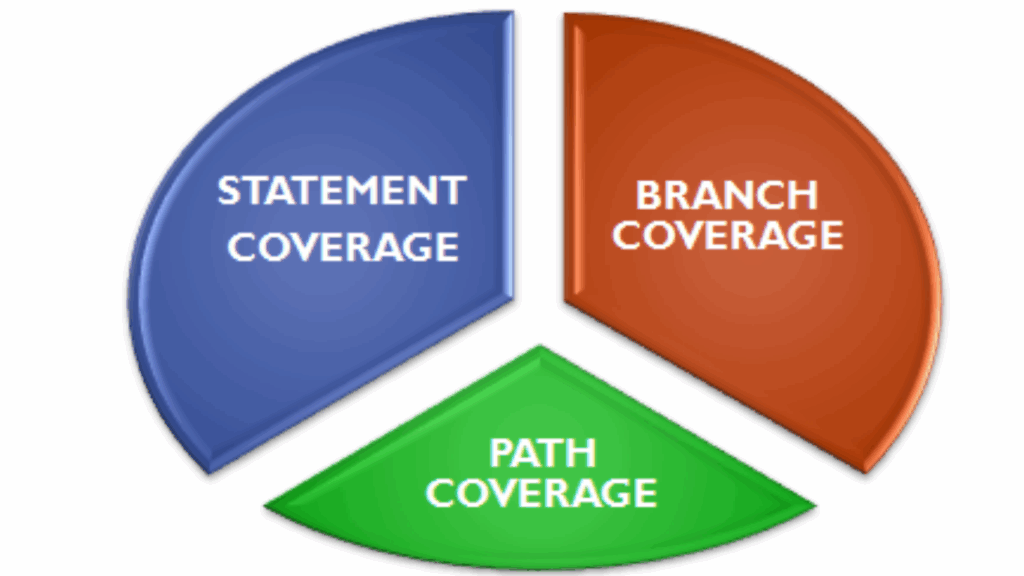
A white box test involves employing various techniques to ensure comprehensive code scrutiny and identify gaps in test case coverage. To attain full code coverage, the following highlights 3 main techniques that can be used.
1. Statement Coverage:
This is a basic building block of Testing Code and involves testing each line or statement of a program as it is presented in the Software Engineering process and writing a test case to provide Statement Coverage for every line tested in this manner. The Statement Coverage method can identify any Dead Code (lines of code that will never be executed) that may exist due to bug fixes, enhancements, and other reasons, and removing dead code improves application performance and security.
2. Branch Coverage:
Because conditional statements create branches in your code where different inputs can take different execution paths, Branch Coverage ensures that all branches have been tested using unit test cases. Testing all branches in detail will insulate developers from ever encountering problems while executing infrequently used code.
3. Path Coverage:
The term execution path refers to the order in which all of the individual pieces of code that execute within an application are executed. A path coverage test ensures that all paths in the software will be executed at least once, with an appropriate number of tests to confirm that the appropriate amount of code has executed and to reveal possible problems with the logic contained within the application’s code to ensure that the application works correctly under a variety of conditions.
In addition to these techniques, white box testing can employ other coverage types, such as Condition Coverage, Multiple Condition Coverage, and Function Coverage, among others. Each technique serves its unique purpose in achieving thorough code scrutiny.
You May Also Like: Why Software Projects Fail and How to Avoid This
Difference Betweeen Black Box, White Box and Grey Box Testing
| Testing Method | What It Focuses On | How It Works |
| Black Box Testing | Looks at the software from a user’s point of view | Testers do not see or use the internal code. They only check inputs, outputs, and overall user experience. |
| White Box Testing | Examines the inner workings of the software | Testers study the code, logic, and internal paths to ensure everything works correctly behind the scenes. |
| Grey Box Testing | Combines both approaches | Testers have partial knowledge of the internal code and also test from a user’s perspective, giving a balanced and thorough evaluation. |
White Box Testing Example
Imagine building a login system for a web application. Here’s a simplified pseudocode for user authentication:
Function AuthenticateUser(username, password):
user = GetUserFromDatabase(username)
If user is null:
Return “User not found”
If user.passwordHash == Hash(password):
Return “Authentication successful”
Else:
Return “Authentication failed”
Sample Test Cases
1. Valid Login
- Input: “Alice”, “Secret123”
- Output: “Authentication successful”
2. User Doesn’t Exist
- Input: “Bob”, “Password123”
- Output: “User not found”
3. Wrong Password
- Input: “Eve”, “WrongPassword”
- Output: “Authentication failed”

Conclusion
Software security and quality are paramount in the digital world we’re currently living in. White-box testing (WBT), or unit testing, provides a way for organizations to test the internal components of software prior to deploying them into production. White box testing will ensure an organization has a complete view of an application’s reliability, performance, and scalability to meet the needs of the organization.
As an example, the ability to provide CI/CD (Continuous Integration/Continuous Delivery) pipelines as part of enterprise-level software development is possible with white box testing because the code is continually being tested as the software is being developed.
Dependibot Solutions provides a range of software testing, security testing, and automation services to ensure that any application will be secure and perform efficiently. Dependibot Solutions experts are dedicated to providing the tools and services necessary to ensure that your applications are reliable and ready for the future.
To learn more about how Dependibot Solutions can assist you in building more secure, faster, and more reliable software, contact us today!